
When We Stop Questioning, We Stop Growing

A small thought on the Japanese philosophy of Shoshin
The more experience we gain, the more confident we become in what we know. Usually, that’s a good thing. Experience helps us make decisions faster, recognise patterns and avoid mistakes we’ve already made.
But there’s another side to it.
The more certain we become, the less likely we are to question what we already believe. We stop looking at familiar things with fresh eyes. And sometimes, without realising it, we stop learning.
There’s a Japanese philosophy that offers a useful way of thinking about this: Shoshin, or beginner’s mind.

Experience Can Become a Blind Spot
Experience is incredibly valuable. But familiarity can also create assumptions.
We’ve done this before. We know how it works. We know what the answer will be.
And once we believe we already know the answer, there’s very little reason to keep looking for another one.
That’s where experience can quietly become a blind spot.
The danger isn’t knowing too much. It’s becoming so comfortable with what we know that we stop questioning whether it is still true, still relevant or still the best way forward.
Sometimes expertise helps us see more.
Sometimes it stops us looking.

What Is Shoshin?
Shoshin is a Japanese term commonly translated as “beginner’s mind.”
It describes the idea of approaching something with the openness, curiosity and willingness to learn that we naturally have when we are new to it.
A beginner doesn’t expect to have all the answers.
They ask questions. They explore. They notice things experienced people may overlook. They are prepared to try something simply because they don’t yet know whether it will work.
Shoshin isn’t about pretending you know nothing.
It’s about recognising that, however much you know, there could always be something you haven’t considered.

You Don’t Have to Be a Beginner to Think Like One
Beginner’s mind isn’t reserved for people starting out.
In fact, it can become more valuable the more experienced you become.
It means being comfortable enough with your own knowledge to still ask the obvious question. To say, “I don’t know.” To listen properly when someone challenges an assumption you’ve held for years.
It also means being willing to try something you might not immediately be good at.
There’s a strange pressure that comes with experience. We begin to feel as though we should know. We should be competent. We should have the answer.
Shoshin gives us permission not to.

Keep the Experience. Recover the Curiosity.
The point isn’t to throw away everything experience has taught us.
It’s to stop experience becoming certainty.
As we become more knowledgeable, we can become more protective of the ideas that got us there. We naturally favour methods that have worked before and become more reluctant to question decisions we once felt confident making.
That makes sense.
But the world changes. People change. Businesses change. Technology changes. What worked five years ago may not work today.
So keep the experience.
Just make sure curiosity grows alongside it.

“I Already Know” vs “What Might I Be Missing?”
There’s a huge difference between approaching something with certainty and approaching it with curiosity.
“I already know” closes the conversation.
“What might I be missing?” opens it again.
One assumes the answer has already been found.
The other leaves enough room for something unexpected to appear.
That small shift in language can completely change how we approach problems, conversations, creative work and decisions.
You don’t have to abandon what you believe.
You simply have to leave the door open to the possibility that there may be more to see.

Familiarity Can Make Things Invisible
Think about somewhere you visit every day.
Your office. Your street. Your home.
When you first saw it, you probably noticed dozens of tiny details. Over time, most of them disappeared.
Nothing physically changed. You simply stopped paying attention to them.
The same thing happens with ideas, processes and problems.
We become so familiar with the way something works that we stop really seeing it. We no longer ask why something is done that way because that is simply how it has always been done.
A beginner doesn’t have that familiarity.
And sometimes that’s exactly why they notice what everybody else has missed.

Curiosity Requires Humility
One of the hardest parts of staying curious is accepting that curiosity can make us feel exposed.
Asking a question means admitting you don’t know the answer.
Trying something new means accepting you might be bad at it.
Changing your mind means acknowledging that what you previously believed may have been wrong.
None of those things are particularly comfortable.
But curiosity requires a little humility.
The people who continue learning aren’t necessarily the people who know the least. Often, they’re the people who are most comfortable admitting that there is still more to know.
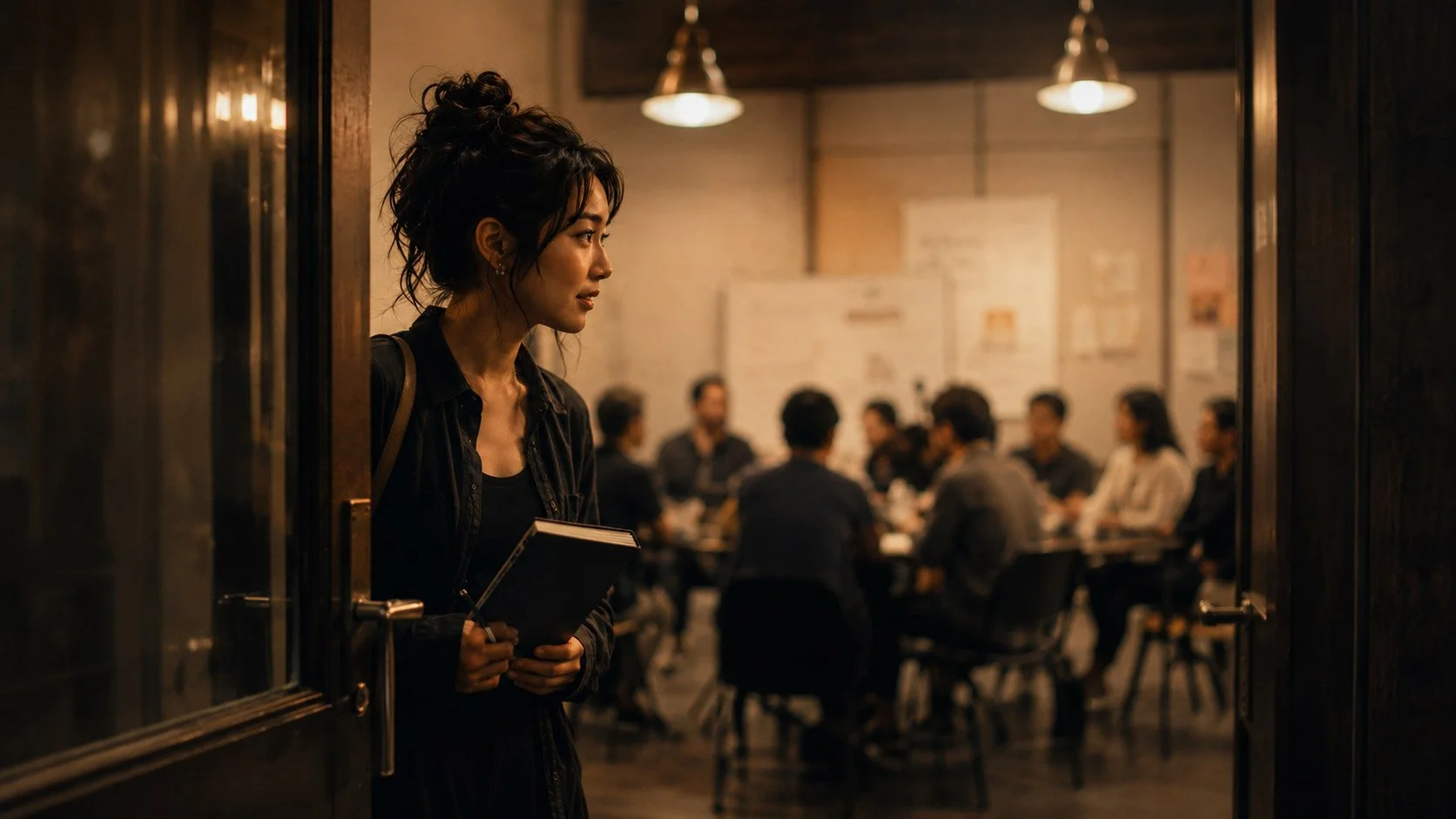
Enter the Room as a Beginner
The next time you walk into a meeting, start a project or face a familiar problem, try changing the questions you ask.
Instead of “I know”, ask “What am I missing?”
Instead of “That won’t work”, ask “What if it could?”
Instead of “We tried that before”, ask “What has changed since then?”
These aren’t dramatic changes.
But they create space.
Space for another perspective. Another idea. Another answer.
And sometimes that is all curiosity needs.

When We Stop Questioning, We Stop Growing
Experience should make us better.
It should give us knowledge, perspective and confidence.
But it shouldn’t remove our ability to be surprised.
Shoshin is a reminder that learning doesn’t end when we become experienced. In many ways, that’s when staying open becomes even more important.
Because growth rarely comes from repeatedly confirming what we already know.
It comes from being willing to question it.
So perhaps the most useful question isn’t:
“What do I know?”
But:
“What might I discover if I stopped needing to already know?”
Shoshin. Beginner’s mind.
What is Shoshin?
Shoshin is a Japanese concept that means “beginner’s mind.” It is the practice of approaching a subject with openness, curiosity and a willingness to learn, even when you already have experience or expertise.
What does beginner’s mind mean?
A beginner’s mind means looking at something without assuming you already know the answer. It encourages curiosity, fresh thinking and a willingness to question familiar ideas, habits and ways of working.
Why is Shoshin important?
Shoshin is important because experience can sometimes create blind spots. By keeping a beginner’s mindset, we are more likely to notice new possibilities, challenge assumptions and continue learning instead of relying only on what has worked before.
How can you practise Shoshin?
You can practise Shoshin by asking more questions, challenging your own assumptions and being willing to say, “I don’t know.” Simple questions such as “What am I missing?”, “What if this could work?” and “What has changed?” can help create a more open mindset.
Can experienced people still have a beginner’s mind?
Yes. Shoshin is not about having less experience. It is about keeping your experience while remaining open to new ideas, different perspectives and the possibility that your current answer may not be the only answer.
How does Shoshin help with personal growth?
Shoshin supports personal growth by keeping us curious. When we remain willing to question what we know, try unfamiliar things and accept that we may be wrong, we create more opportunities to learn, adapt and develop.
How can Shoshin help in business?
In business, Shoshin can help teams challenge outdated assumptions, explore new ideas and respond more effectively to change. It can be particularly useful in strategy, leadership, problem-solving, innovation, branding and creative thinking.
What is the difference between Shoshin and inexperience?
Inexperience means not yet having knowledge or skill. Shoshin is different because it is a deliberate mindset. An experienced person can practise Shoshin by temporarily setting aside certainty and approaching a problem with the curiosity of someone seeing it for the first time.
Why can experience become a blind spot?
Experience can become a blind spot when familiarity turns into certainty. The more often we do something, the easier it is to assume we already understand it, which can stop us noticing changes, questioning old habits or considering new possibilities.
What happens when we stop questioning?
When we stop questioning, we risk becoming fixed in our thinking. Curiosity helps us learn, adapt and grow, so when questioning disappears, growth can slow with it.
Is Shoshin useful for creativity?
Yes. Shoshin can be especially useful for creativity because it encourages people to explore ideas without immediately dismissing them based on past experience. It creates more room for experimentation, new perspectives and unexpected solutions.
What is a simple Shoshin question to ask yourself?
One of the simplest Shoshin questions is:
“What might I be missing?”
It is a useful reminder that even when we feel confident in what we know, there may still be another perspective, idea or answer worth exploring.
NEED OUR HELP?
Whether it's Branding, Design, Websites, Photography, Video, Print or Social Media, we can help you make an impact.