
When X Marks The Wrong Box
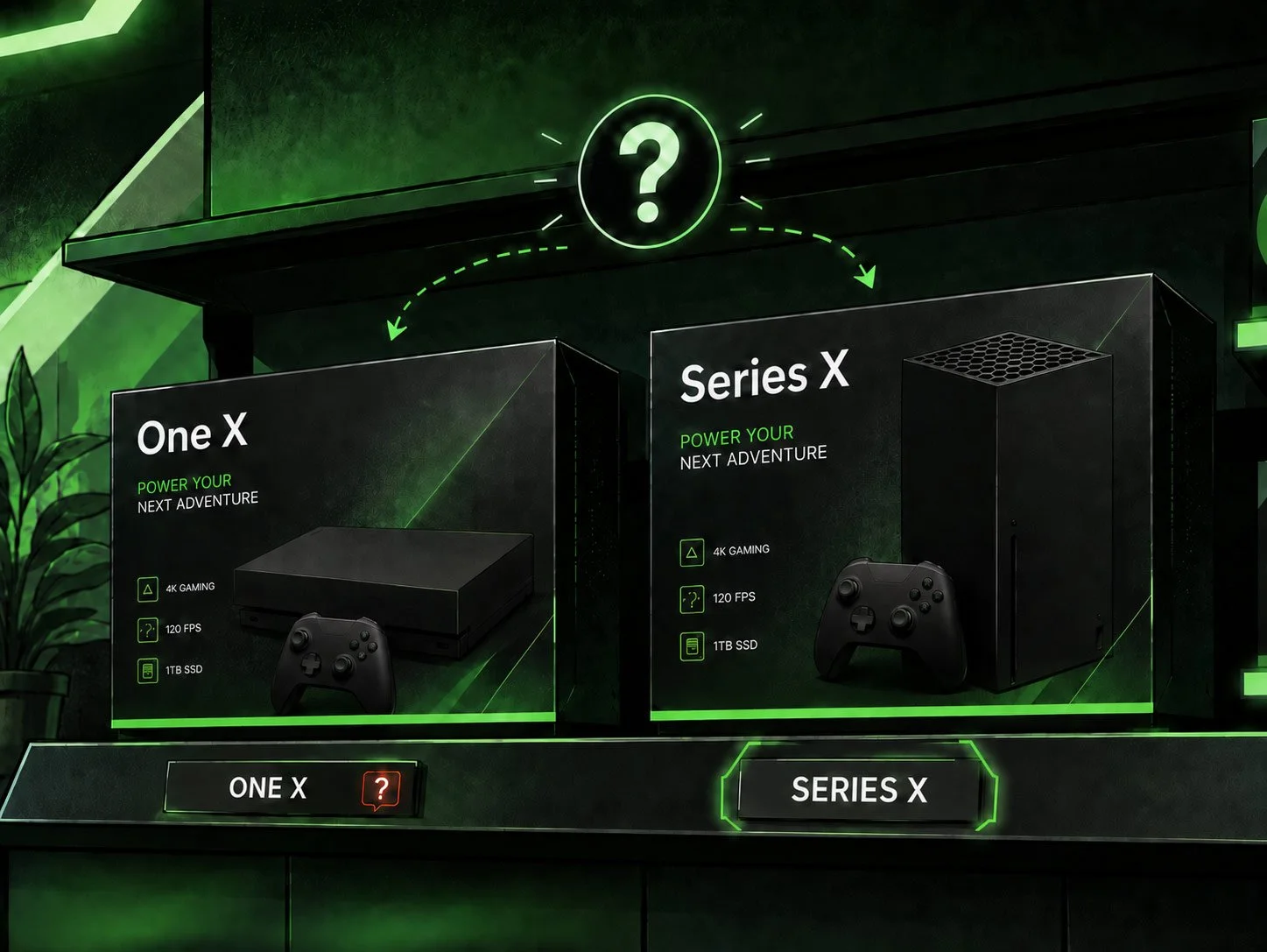
There are confusing product names. And then there is Xbox.
A brand so powerful it gave us one of the most iconic consoles of all time, built a global gaming community, went toe-to-toe with PlayStation, and then somehow decided that the best way to name its consoles was to throw the words One, Series, S and X into a bag and shake it like a tombola.
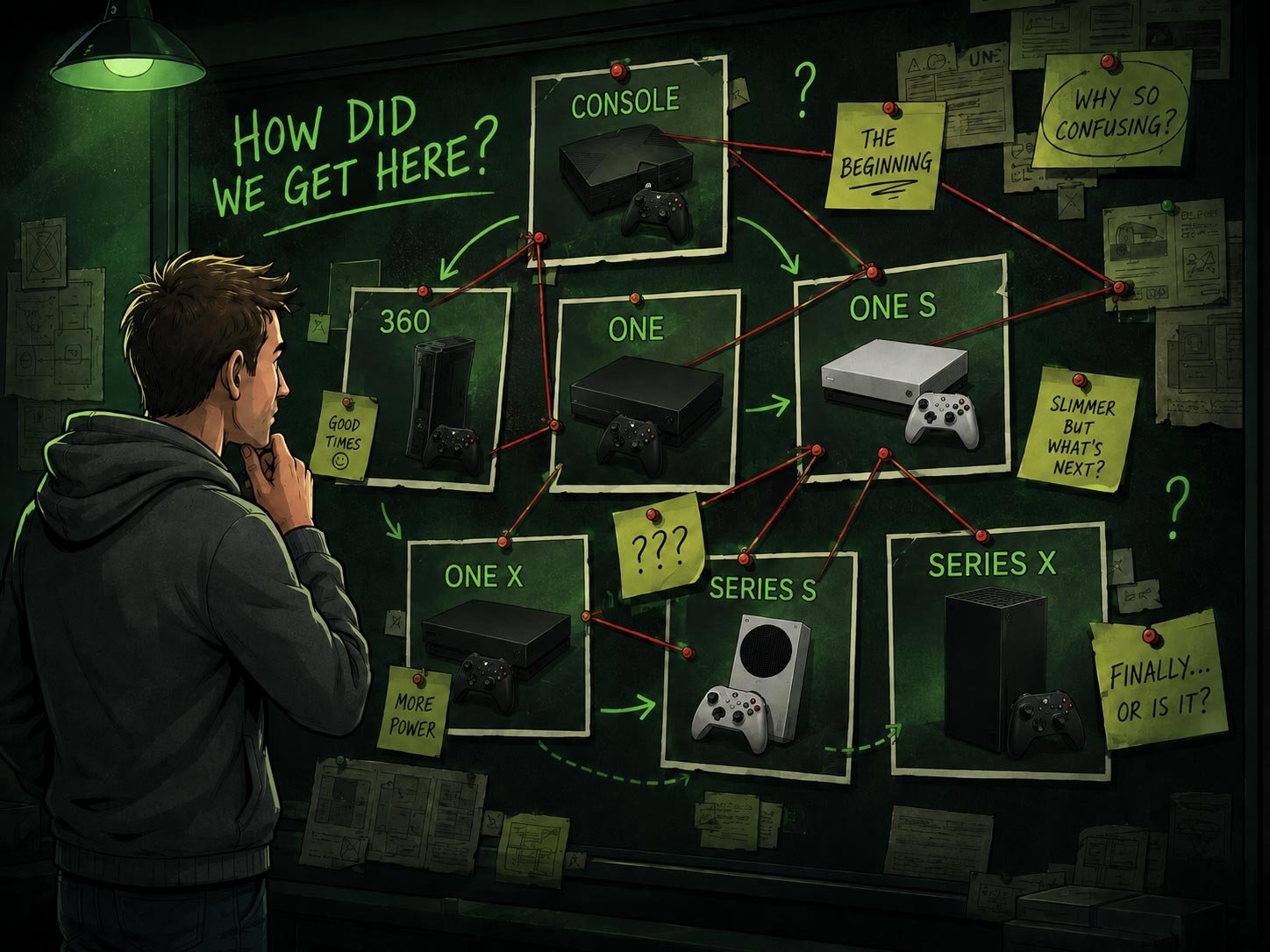
Xbox.
Xbox 360.
Xbox One.
Xbox One S.
Xbox One X.
Xbox Series S.
Xbox Series X.
Lovely.
Somewhere in Microsoft HQ, that probably made perfect sense. In the real world, it left parents, casual gamers and Christmas shoppers staring at shelves thinking:
“Is the Xbox One X newer than the Xbox Series X?”
“Is the Xbox One the first one?”
“Why is Xbox 360 older than Xbox One?”
“Why do I need a GCSE in console architecture to buy FIFA?”
And that is where this becomes more than a gaming issue.
It becomes a branding issue.
The Xbox Series X problem
When Microsoft launched the Xbox Series X, the naming confusion became more than a few jokes online.
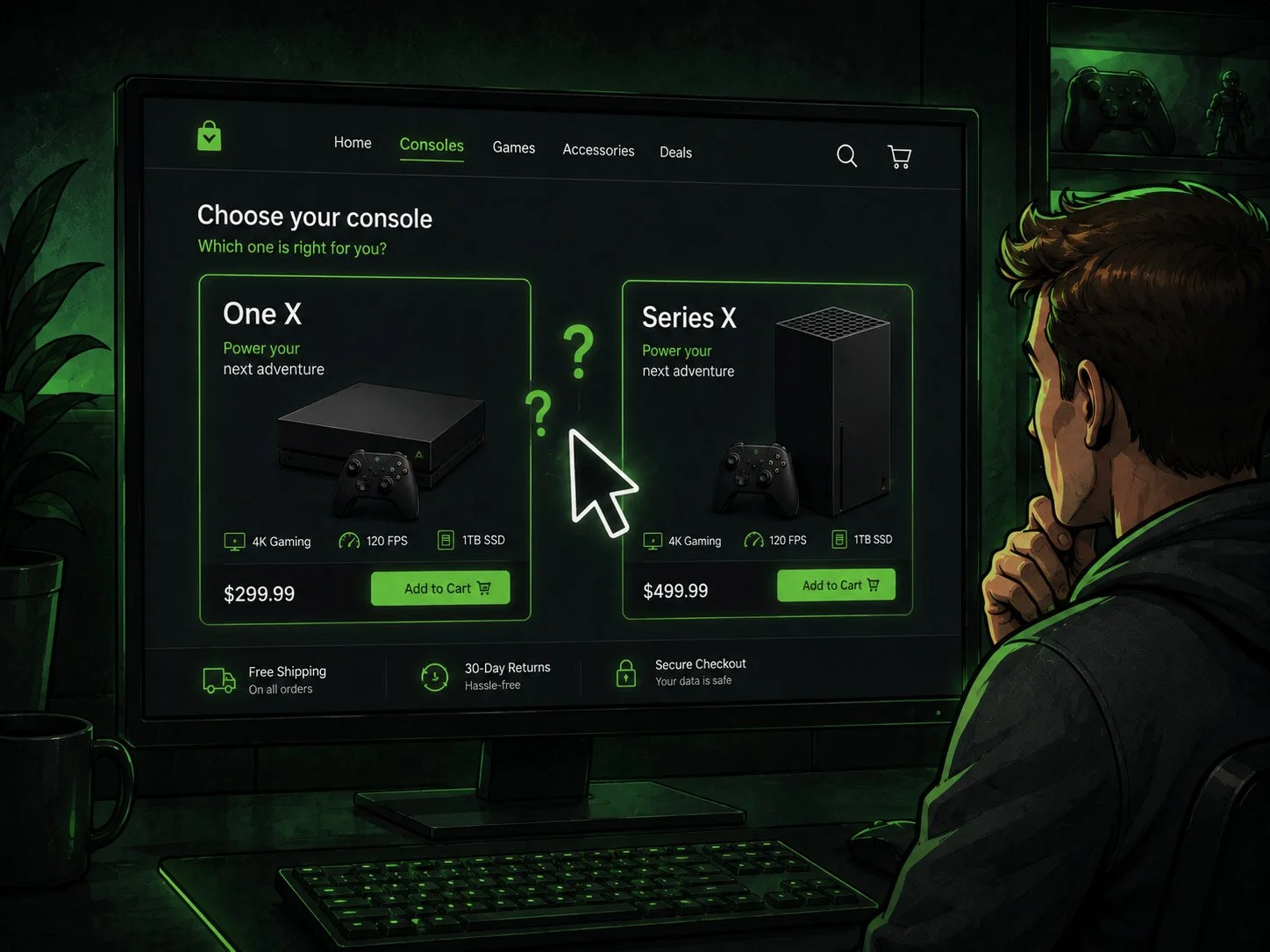
In September 2020, as pre-orders opened for the new Xbox Series X, the older Xbox One X suddenly shot up Amazon’s sales rankings. At the time, this led to plenty of speculation that some customers may have been buying the older console by mistake because the names were so similar.
And honestly, you can see why.
Xbox Series X.
Xbox One X.
To a tech-savvy gamer, there is a difference. To a parent trying to get the right Christmas present, that difference is a banana skin in a shop aisle.
One word changes the whole product.
“Series” means new generation.
“One” means old generation.
But if your audience needs to understand your internal naming architecture before they can confidently buy the product, the name is already making them work too hard.
And customers do not like homework.
How did we get here?
The original Xbox name was great.
Short. Punchy. Memorable. A bit aggressive. A bit futuristic. Very gaming.
Then came Xbox 360.
Still pretty strong. It suggested a full entertainment experience, a complete world, gaming all around you. You can debate whether it was better than simply calling it Xbox 2, but at least it felt distinct. Xbox and Xbox 360 were clearly different things.
Then came Xbox One.
Which was, naturally, the third Xbox.
Of course.
The logic behind the name was that Xbox One was designed as an all-in-one entertainment system. Games, TV, movies, music, apps, all sitting under one roof.
So internally, the name had a reason.
But there is the trap.
Just because a name has a reason does not mean it makes sense to the customer.
To a casual buyer, Xbox One could easily sound like the first Xbox, a reboot of the original Xbox, or a simpler version of the Xbox 360. It does not naturally sound like the third major console in the family.
That is the danger with clever naming.
It makes sense in the meeting.
It makes sense in the strategy deck.
It makes sense when someone explains it using a diagram and the phrase “brand ecosystem”.
But in the shop, on Amazon, or in a rushed conversation with your child three days before Christmas, it has to make sense instantly.
PlayStation took the boring route. And it worked.
Now compare that with PlayStation.
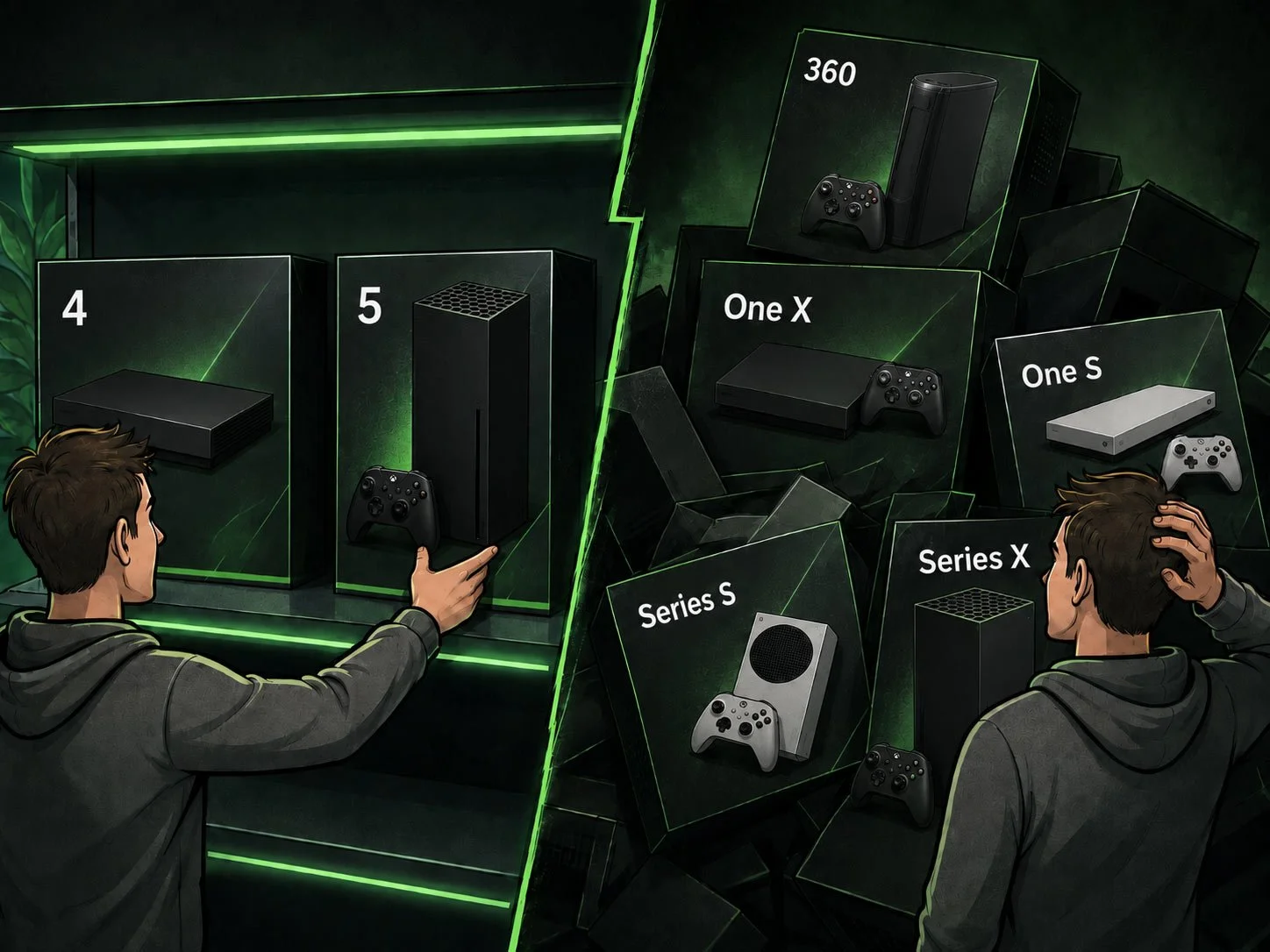
PlayStation.
PlayStation 2.
PlayStation 3.
PlayStation 4.
PlayStation 5.
Is it exciting? Not really.
Is it poetic? No.
Does it sound like a brand consultant spent six months in a room naming it after a moon phase? Absolutely not.
But does everyone understand it?
Yes.
Five is newer than four. Four is newer than three. Three is newer than two.
Beautiful. Simple. No drama.
You do not need to be a gamer to understand which PlayStation is the latest. You just need to be able to count.
And that is the point. Sometimes the best naming system is not the cleverest one. It is the one that creates the least friction.
In branding, boring is not always bad.
Sometimes boring is clear.
And clear sells.

The real issue: internal logic vs customer logic
This is where a lot of businesses get naming wrong.
They name things from the inside out.
They use language that makes sense to the team, the founder, the product developer, the operations manager, or the person who has lived and breathed the business for ten years.
But customers are not inside the business.
They do not know the backstory.
They do not know why one service is called “Elevate” and another is called “Ascend”.
They do not know why your bronze package is actually more advanced than your silver package because “bronze represents foundations” or whatever was said in that meeting.
They just want to know what it is, who it is for, and whether they should buy it.
That is the job of a name.
A name is not just a label. It is a shortcut.
It helps people make sense of something quickly.
When it works, customers feel confident.
When it fails, customers hesitate.
And hesitation is where sales go to die.
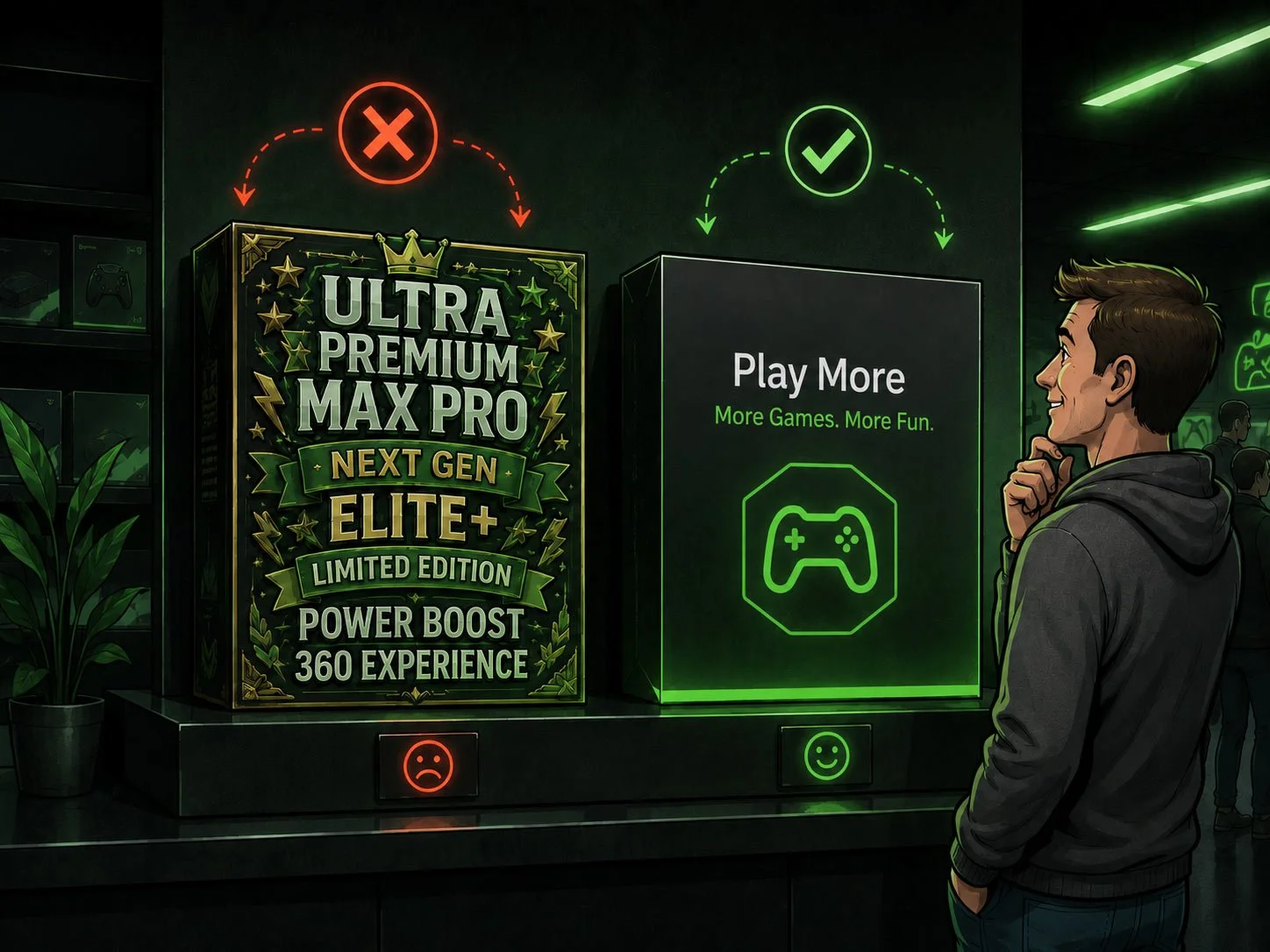
Your name might be clever. But is it useful?
There is nothing wrong with creativity in naming. In fact, a great name can be one of the strongest assets a brand has.
But creativity without clarity is just decoration.
A name has to work hard. It has to carry meaning. It has to fit into a wider brand system. It has to be easy to say, easy to remember and easy to understand.
Especially when you have multiple products, services, tiers or packages.
Because the moment you create a range, you are not just naming one thing. You are building a naming system.
That system needs rules.
If one service is called “Launch”, another is called “Momentum”, another is called “Scale”, and another is called “The Business Growth Accelerator Premium Pro Max Experience”, you may have a problem.
Not because any individual name is terrible.
But because the system does not help people navigate.
And that is exactly where Xbox got itself into trouble.
Xbox Series X might not be an awful name in isolation.
Xbox One X might not be an awful name in isolation.
But put them together, on the same shelf, aimed at overlapping audiences, with similar designs, similar colours and similar price points, and suddenly the customer is playing a game they never asked to play.
Spot the Difference: Console Edition.

This matters even more for smaller businesses
Microsoft can survive a confusing name.
It has billions in brand equity, huge marketing budgets, retail partnerships, influencers, reviewers, comparison videos, launch events and enough online coverage to brute-force understanding into the market.
Most businesses do not have that luxury.
If your service names are confusing, people will not go on a research journey.
They will not open a spreadsheet.
They will not read six pages of your website to understand whether “Core”, “Plus” or “Impact” is the one they need.
They will just leave.
That is why naming matters so much for smaller brands.
Your customers are busy. They are distracted. They are comparing you with competitors. They are trying to make a decision quickly.
The easier you make that decision, the better.
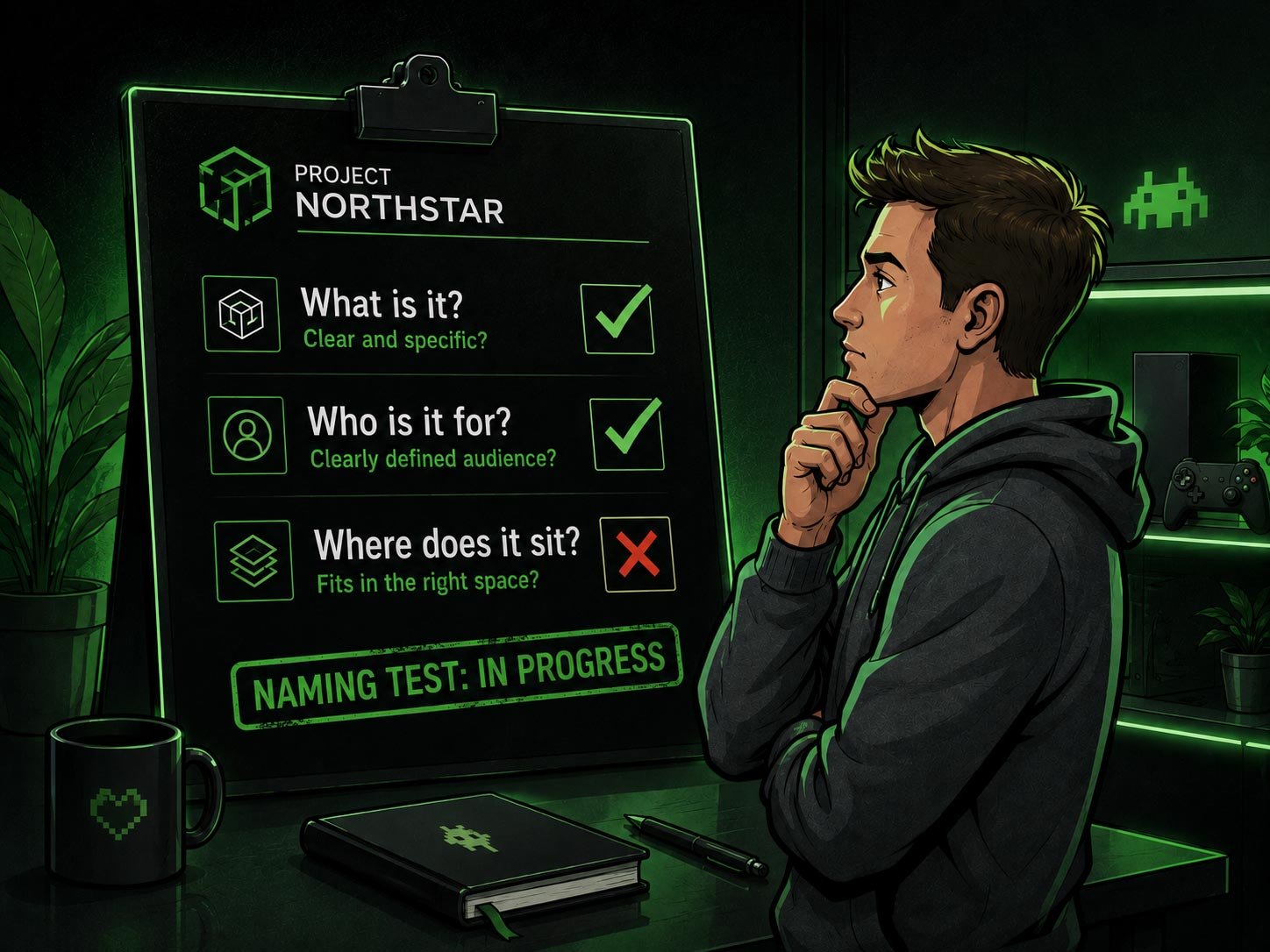
A simple test for your own names
Here is the test.
Show someone your product, service or package name and ask them three questions:
What do you think this is?
Who do you think it is for?
Where do you think it sits in the range?
If they cannot answer without you explaining it, the name is not doing enough.
That does not always mean the name is bad. It may mean the supporting copy is weak. It may mean the range needs simplifying. It may mean the hierarchy is unclear.
But it does mean there is friction.
And in branding, friction matters.
Because people rarely say, “I didn’t buy because the naming architecture lacked intuitive hierarchy.”
They say:
“I didn’t really get it.”
Which is much worse.

The lesson from Xbox
The Xbox naming problem is funny because it feels so avoidable.
Nobody expects Microsoft to just copy PlayStation and call every console Xbox 2, Xbox 3, Xbox 4 and Xbox 5. Brands need their own personality. They need distinctiveness. They need room to evolve.
But distinctiveness should not come at the cost of understanding.
A good name should guide people.
It should make the product easier to buy, easier to talk about and easier to remember.
It should not make people check five Reddit threads, three comparison videos and an Amazon product listing before they know whether they are buying the right black rectangle.
That is the real branding lesson.
Your name can be fun.
It can be clever.
It can be different.
It can have a story behind it.
But first, it has to make sense.
Because when X marks the wrong box, the customer is not the problem.
The naming is.
FAQs
Quick answer: why was the Xbox Series X name confusing?
The Xbox Series X name was confusing because it sounded extremely similar to the older Xbox One X. Both names used the Xbox master brand, both ended in X, and both looked like premium console names. For casual buyers, especially parents or non-gamers, the difference between “Series” and “One” was easy to miss.
What can businesses learn from Xbox’s console names?
Businesses can learn that product names should be clear, easy to understand and built around the customer’s point of view. A name might make sense internally, but if the audience cannot quickly understand what it is, where it sits, or whether it is right for them, the name is creating friction.
Is simple naming better than creative naming?
Not always. Creative naming can be powerful when it adds personality and memorability. But simple naming often works better when customers need to compare products, understand a range, or make a quick buying decision. The best names are both distinctive and clear.
How do you know if a product name is confusing?
A product name is probably confusing if people regularly ask what it means, compare it with the wrong thing, mispronounce it, misremember it, or need a full explanation before they understand it. A good name should do some of the explaining for you.
What is brand architecture?
Brand architecture is the way a company organises and names its brands, products, services, packages or sub-brands. It helps customers understand what belongs where. Done well, it makes buying easier. Done badly, it makes everything feel like an Xbox shelf in 2020.
Need help naming your products, services or packages?
A great name should not need a customer support guide.
If your brand, offer or service range is starting to feel harder to explain than it should, it might be time to get it properly structured. The right naming system can make your business easier to understand, easier to sell and much easier to remember.
NEED OUR HELP?
Whether it's Branding, Design, Websites, Photography, Video, Print or Social Media, we can help you make an impact.